By Paul Nyojah Dalafu
In the Northern and Oti regions, the impact of climate change is strongly felt due to rapid environmental degradation caused by bush burning and deforestation. These challenges make the area a fertile ground for promoting safe and clean energy alternatives through the Cylinder Recirculation Model (CRM).
However, the inaccessibility of Liquefied Petroleum Gas (LPG) stations poses a major threat to the success of the CRM campaign in Northern, Oti, and adjoining communities.
The situation is not different in the other five northern regions of Ghana. There is therefore a pressing need for authorities to intensify education, advocacy, and infrastructure expansion to support the CRM policy in these areas.
While efforts by the Ghana Gas Company to sensitize citizens on the importance of switching from charcoal and firewood to LPG are commendable, more must be done. It is crucial for the responsible agencies to ensure the establishment of LPG refill stations across the length and breadth of the country to make refilling cylinders convenient, accessible, and safe for all.
This call is informed by my personal experience in Kpandai and its environs. Although many residents are willing to switch from firewood and charcoal to LPG, their enthusiasm is being dampened by the lack of nearby refill stations.
Several LPG users shared with me their struggles in accessing refill services. Many are forced to travel long distances just to refill their cylinders. What they initially believed would be an easy, affordable, and clean energy option has turned into a burden — leaving them torn between returning to firewood and charcoal or enduring the high cost and inconvenience of LPG.
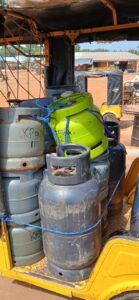
Consumers lamented that, in addition to the inaccessibility of refill stations, they often have to hire vehicles or tricycles to transport their empty cylinders to distant towns such as Dambai (Oti Regional capital), Salaga, and Nkwanta South for refilling.
The distances are considerable:
• Kpandai to Dambai – 68 kilometres
• Kpandai to Salaga – 69 kilometres
• Kpandai to Yendi – 120 kilometres
• Kpandai to Nkwanta South – 120 kilometres
Beyond cost and accessibility, consumers also expressed concern about the safety risks associated with transporting such highly flammable materials over long distances under the scorching sun. The risk of an explosion or accident remains high, especially given the lack of safety equipment such as fire extinguishers during transit.
Some motorists confirmed that due to these risks, they charge higher fares for transporting gas cylinders—ranging between GH₵25 and GH₵60 per cylinder, depending on the size and weight.
On one particularly hot day while traveling from Kpandai to Dambai, I could not help but ponder the danger faced by tricycle riders who risk their lives daily to transport gas cylinders for refilling. One small mistake could lead to a tragedy, yet many of them remain unaware of the magnitude of the risk they face.
The implementation of the Cylinder Recirculation Model (CRM) by the National Petroleum Authority (NPA) aims to ensure that at least 50 percent of Ghanaians have access to safe, clean, and environmentally friendly LPG by 2030.
If successfully executed, the CRM policy could significantly reduce deforestation resulting from the use of wood fuel, which continues to deplete Ghana’s forest reserves. The policy will also enhance safety standards, accessibility, and efficiency in LPG production, distribution, and usage nationwide.
According to a report by the Chamber of Oil Marketing Companies (COMAC), Ghana’s Liquefied Petroleum Gas (LPG) consumption in the first half of 2025 stood at 168,636,916 kilograms, compared to 160,541,591 kilograms recorded during the same period in 2024. This represents an increase of 8,095,325 kilograms, or approximately 5%, in LPG consumption across the country.
In terms of regional distribution, the data indicates that the Northern Region consumed 3,614,780 kilograms of LPG in the first half of 2025, compared to 7,161,580 kilograms in the same period of 2024. This shows a decrease of 3,546,800 kilograms, representing a 49% decline in LPG consumption within the region which is a clear indication of the accessibility gap in the northern parts of the country.
The Cylinder Recirculation Model serves as the implementation framework for the National LPG Policy. It provides a structured, market-driven approach to ensuring that LPG is distributed safely and efficiently, while also strengthening regulatory capacity to enforce health, safety, and environmental standards.
The success of the CRM policy depends not only on public education but also on the establishment of widespread infrastructure that guarantees accessibility and safety. Without adequate LPG refill stations across Ghana—especially in the northern sector—the noble goal of transitioning to clean energy will remain elusive, leaving communities to fall back on destructive traditional fuels.
To truly combat climate change and promote environmental sustainability, Ghana must match policy ambition with practical accessibility.
The Writer is a Journalist, Public Relations practitioner and communications specialist. Email address: paulnyojah30@gmail.com

