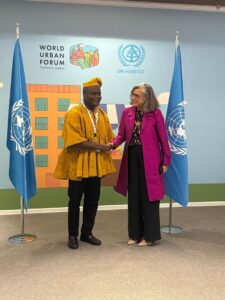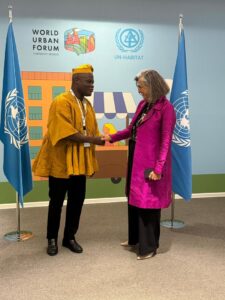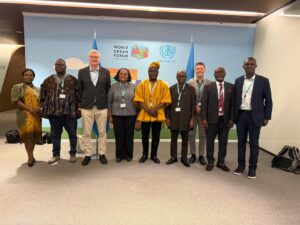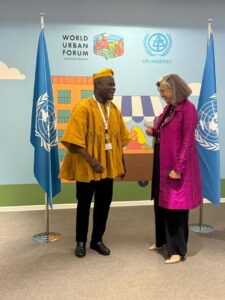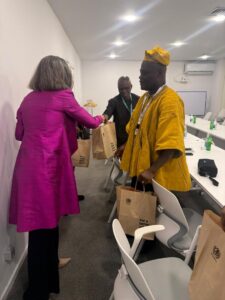
Ghana has reaffirmed its commitment to sustainable urban development, affordable housing, and climate-resilient cities at the Thirteenth Session of the World Urban Forum (WUF13) held in Baku, Azerbaijan.
Delivering Ghana’s country statement on behalf of President John Dramani Mahama and the people of Ghana, Minister for Local Government, Chieftaincy and Religious Affairs, Hon. Ahmed Ibrahim, highlighted the country’s efforts to address rapid urbanisation through decentralisation, integrated planning, and strengthened local governance.
Addressing delegates at the global gathering organised by the UN-Habitat, the Minister said Ghana fully supports the forum’s theme, “Housing the World: Safe and Resilient Cities and Communities,” describing housing as a critical pillar for dignity, resilience, productivity, and social inclusion. Read Also: Afriyie Ankrah Calls for National Renewal
He noted that Ghana’s growing urban population presents opportunities for innovation, enterprise, and economic transformation, but also places increasing pressure on housing, sanitation, drainage systems, transportation, waste management, and other public services.
According to the Minister, the government is implementing a comprehensive urban agenda aimed at empowering Metropolitan, Municipal and District Assemblies (MMDAs) to better plan, finance, and deliver essential services. He said ongoing decentralisation reforms are focused on enhancing accountability, local economic development, citizen participation, climate resilience, and innovation.
Hon. Ahmed Ibrahim revealed that Ghana has revised its National Urban Policy and Implementation Plan to promote coordinated, data-driven, and investment-ready urban development across the country. http://dailydemocratnewsonline.com
On housing, he outlined several initiatives being implemented by the government, including the National Homeownership Fund, which is designed to expand access to long-term financing for civil servants and workers in the informal sector.
He also highlighted the Affordable Housing Programme, under which government support for serviced land and infrastructure is helping to reduce housing delivery costs by up to 40 percent. Additionally, the District Housing Programme is promoting the use of local building materials and climate-smart construction techniques to improve affordability while reducing environmental impact.
The Minister further pointed to flagship initiatives such as the Local Economic Development Policy and the 24-Hour Model Market Initiative, which seek to modernise market infrastructure, reduce congestion, improve sanitation and safety, create jobs, and support women- and youth-led enterprises.
On climate action, he said Ghana continues to support locally driven adaptation programmes that enable communities and local authorities to invest in resilience-building projects tailored to their specific needs.
Hon. Ahmed Ibrahim called for accelerated implementation of the New Urban Agenda through stronger local institutions, improved access to urban and climate finance, and greater international cooperation.
He stressed that developing countries require practical support in the form of financing, technology transfer, capacity building, and policy partnerships to effectively address urban challenges and deliver sustainable development at scale.
The Minister reaffirmed Ghana’s readiness to work with international partners to build inclusive, safe, resilient, and sustainable cities and communities for current and future generations.