
The Agroecology and Circular Economy for Ecosystem Services in Sub-Saharan Africa (ACE4ES) project has launched a pivotal sensitization workshop in Abuja, bringing together key stakeholders to address the twin challenges of climate change and food security through innovative agricultural practices. Supported by the Climate and Clean Air Coalition (CCAC) of UNEP, the project is a trailblazer in reducing Short-Lived Climate Pollutants (SLCPs) such as methane and black carbon, while fostering sustainable food systems.
The workshop, held at Bluespring Hotel in the Federal Capital Territory, showcased actionable strategies for reducing SLCP emissions, particularly in rice and maize production, through agroecology and circular economy practices. These efforts align with the project’s broader goal of creating resilient, inclusive, and environmentally sustainable food systems across Nigeria, Ghana, Benin, and Tanzania.
SLCP Reduction: A Core Focus
The ACE4ES initiative emphasizes the critical role of mitigating SLCPs, which have a significantly higher global warming potential than carbon dioxide over shorter time frames. The workshop featured practical measures for SLCP reduction, including:
Encouraging composting, reduced reliance on synthetic fertilizers, and agroforestry to cut methane and nitrous oxide emissions.
Promoting waste recycling, organic matter reuse, and integrating livestock into crop systems to enhance nutrient cycling while minimizing emissions.
Highlighting water-saving methods and alternate wetting and drying practices to reduce methane emissions from flooded rice paddies.
In his opening address, Dr. Kwaku Asante, ACE4ES Project Lead, underscored the urgency of tackling SLCPs, stating, “Short-lived climate pollutants are potent drivers of climate change and environmental degradation. Through the ACE4ES initiative, we are demonstrating how nature-based solutions can significantly mitigate these emissions while improving agricultural productivity.”
Stakeholder Engagement and Commitment
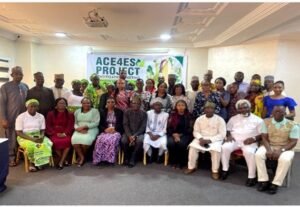
The workshop brought together 52 participants from government agencies, farmer associations, civil society organizations, academia, and the media. Representatives from key ministries, including the Federal Ministries of Agriculture, Environment, and Water Resources, pledged their support for the project.
Sani Abdullahi, Deputy Director of Climate Change at the Federal Ministry of Water Resources, highlighted the workshop’s importance, stating, “Reducing SLCPs in agriculture is essential for mitigating climate change. This initiative is timely, and the ministry is committed to supporting its implementation nationwide.”
Key Outcomes from the Workshop
Pre- and post-training assessments revealed a dramatic improvement in participants’ knowledge, with test scores increasing from an average of 10% to over 90%.
Concrete Next Steps for SLCP Mitigation included the
Creation of a WhatsApp network for continuous engagement and knowledge sharing among stakeholders.
Proposal from NESREA to establish agroecology and circular economy demonstration plots in all 36 states and the FCT, showcasing SLCP reduction techniques in action.
Alignment of work plans between government agencies and farmer groups to streamline efforts.
Stakeholders reviewed the draft regional policy on agroecology and circular economy, with a focus on integrating SLCP mitigation strategies into national frameworks. Participants called for alignment with Nigeria’s Nationally Determined Contributions (NDCs) under the Paris Agreement.
The success of the ACE4ES initiative is made possible by the generous funding and technical guidance provided by the Climate and Clean Air Coalition (CCAC) under the United Nations Environment Programme (UNEP). The CCAC’s backing underscores the global importance of reducing SLCPs to combat climate change while achieving co-benefits for public health, food security, and sustainable development.
Dr. Adeyemo Isaiah, ACE4ES Country Representative, expressed gratitude for CCAC’s support, noting, “This project is a testament to the power of collaboration between local stakeholders and international organizations like the Climate and Clean Air Coalition. Together, we can create scalable solutions that reduce emissions and transform agriculture in Nigeria.”
Lessons Learned and Participant Voices
Participants shared their reflections, highlighting key takeaways from the workshop:
“I now understand how agroecology and circular economy practices can reduce emissions and increase crop yields. This knowledge is invaluable,” said a participant from MAGPAMAN.
“As a woman farmer, I’ve learned how my practices can contribute to a healthier environment. I am committed to adopting agroecological practices and promoting sustainable techniques,” shared a member of SWOFON.
Recommendations and Path Forward
The workshop concluded with actionable recommendations to scale the impact of ACE4ES as follows:
Conduct similar sensitization sessions across Nigeria’s six geopolitical zones to engage more stakeholders and farmers.
Establish state-level demonstration sites to showcase SLCP reduction practices and train local farmers.
Provide continuous training and mentoring for stakeholders to bridge knowledge gaps.
Align SLCP mitigation efforts with Nigeria’s agricultural and environmental policies, ensuring a unified approach to climate action.
The ACE4ES project is poised to revolutionize agriculture in Nigeria by tackling the urgent challenge of SLCP emissions. With support from stakeholders and partners like CCAC, the initiative is paving the way for a sustainable future where agriculture thrives without compromising the environment.

