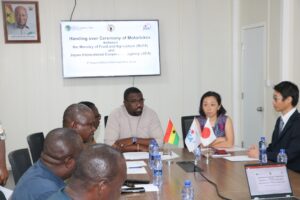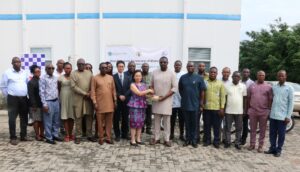
The Japan International Cooperation Agency (JICA) has donated 30 motorbikes to Ghana’s Ministry of Food and Agriculture (MoFA) to enhance the mobility and efficiency of Agricultural Extension Agents (AEAs) across the country. The donation forms part of the Ghana Rice Production Improvement Project (GRIP), a collaborative initiative between JICA and MoFA aimed at boosting domestic rice production.
At a brief ceremony in Accra, Ms. Suzuki Momoko, Chief Representative of JICA Ghana Office, reaffirmed JICA’s long-standing support for Ghana’s agricultural sector, particularly rice cultivation. She noted that JICA has worked with Ghana for over two decades to improve rice production and productivity. The motorbikes, she explained, will enable AEAs to access remote farms more easily and deliver timely technical advice to farmers, overcoming persistent challenges of mobility and field coverage.
The motorbikes will be distributed across project areas in the Bono East, Eastern, Oti, and Western North regions, as well as in major irrigation schemes at Kpong, Bontanga, Tono, and Weta. This intervention is expected to expand the reach of extension services, improve cultivation practices, and ultimately increase yields and farmers’ incomes.
Deputy Minister for Food and Agriculture, Hon. John Dumelo, who received the motorbikes on behalf of MoFA, expressed appreciation to the Government and people of Japan for their continued partnership. He described the donation as “timely and strategic,” noting that it aligns with the government’s Feed Ghana Programme, which prioritizes equipping extension officers to deliver modern technologies and support directly to farmers in rural areas.
Hon. Dumelo assured JICA of the ministry’s commitment to ensuring that the motorbikes are used effectively and maintained properly to achieve sustainable results. He emphasized that the partnership between Ghana and Japan reflects a shared vision for innovation, sustainability, and capacity building in the agricultural sector.
The initiative is expected to significantly contribute to Ghana’s goal of achieving rice self-sufficiency and improving the livelihoods of farmers nationwide.