The Ghana Federation of Disability Organisations (GFD) has expressed worry over the failure of successive governments exclusion of ‘Social Welfare’ from the list of priority areas funded by petroleum revenues.
According to GFD, this issue has continue since 2011, a situation the group described as unfortunate.
GFD said the exclusion alone questions successive governments efforts to create an all inclusive society, adding that neglecting to prioritize the needs of Persons with Disability under the Annual Budget Funding Amount (ABFA) as stipulated by law was a huge disservice.
ABFA constitutes the main channel through which petroleum revenues are used to support the budget, per the Petroleum Revenue Management Act (PRMA) 2011 (Act 815) as amended.
.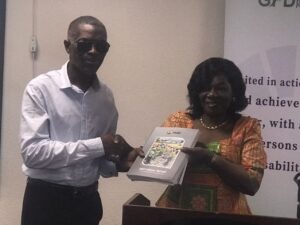
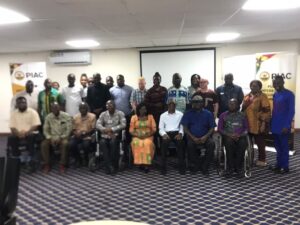
Based on this the Public Interest Accountability Committee(PIAC) met with the GFD society to educate them on how revenue from the petroleum sector are spent.
Speaking at the sideline, the National President of GFD, Mr. Joseph Atsu Homadzi, expressed disappointment that base all the priority areas where petroleum revenue are spend does not make direct impact of social welfare
“If you are a nation and you don’t focus and make deliberate attempts to support vulnerable people, that nation will have a problem in its growth. Because the vulnerable people will become a liability to society, as they will be on the streets begging,” he stated.
Mr. Homadzi added:that nations will only grow when you provide and strengthen disability support so that persons with disability can survive on their own while contributing their quota to national development.
“If you do this as a nation, then we can say this society is growing because it means you are carrying all your citizens along, whether they are vulnerable or not.”
“But in a situation where you cut off the vulnerable people and only consider a few with the majority becoming a liability, there is a problem,” he stated.
He therefore called for government and political parties to prioritise the Social Welfare sector. This, he said will go a long way to help vulnerable people become self-sufficient.
“It is seen that the exclusion of social welfare from ABFA’s priority areas has consistently marginalised Persons with disabilities and hindered their progress toward nation building.”
He indicated that the only time persons with disability benefited was in 2012, when government allocated some GH₡10million to train a total of 5,000 PWDs in ICT, mobile phone and computer repairs and assembling under the Capacity Building priority
The Chairperson of PIAC Emerita Prof. Elizabeth Ardayifio Schandorf said PIAC was established to be a watchdog to monitor the disbursement and use of the Petroleum Funds as stated by the law.
Prof. Elizabeth Ardayifio mentioned that, PIAC as a watchdog of Ghana’s Petroleum Revenue is making sure that resources are used in the interest of the people through its utilization and management of the Petroleum resource.
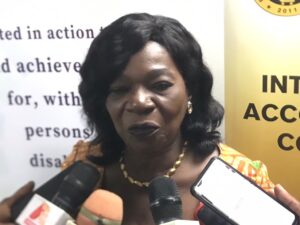
The Petroleum resources she averred, is allocated, disbursed and used in according to the Act of Parliament adding that the Act says, for every 3 years the government should select 4 areas where monies would be spent.
A member of PIAC, Mr. Richard Ellimah representing Civil Society Organisations/Community-Based Organisations (CSOs/CBOs), said the omission of Social Welfare priority area that caters for the needs of Persons with Disability is a matter of concern.
He said the Persons with Disability basically is made up of 8%, hence there should be conscious effort to map up strategy to include them. “Because they are basically ignoring the needs of about 8 percent of our nation which is made up of PWDs”.
The engagement by PIAC with members of GFD was to present highlights from the 2023 PIAC Annual Report and explore collaborative options for promoting inclusive use of petroleum revenues for the benefit of all citizens.
The Coordinator of PIAC, Isaac Dwamena – explaining the rationale behind the engagement with PWDs, noted that the event is line with PIAC’s mandate to provide a platform for all citizens of the country to participate in debate on use of petroleum revenues.

