The Minister designate for Environment, Science and Technology and Innovation, Hon. Ophelia Mensah Hayford has suggested the need for Ghana to prioritise its effort to eliminate the use mercury use by the artisanal and small-scale gold mining companies.
“Having successfully conducted the Minamata Initial Assessment in 2018 and subsequently prepared a National Action Plan on ASGM in 2020, we have as a country outlined several comprehensive strategies to enable us meet our obligations of promoting mercury-free gold processing in the ASGM Sub-sector”.
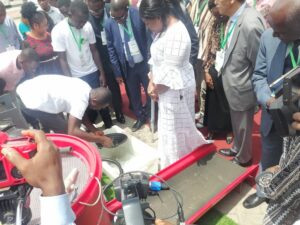
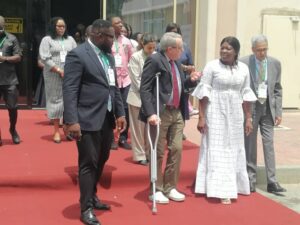
She made this statement at the Regional meeting of the Africa Environmental Health and Pollution Management Programme held in Accra.
“The Environmental Protection Agency Act, 1994 (Act 490) and its attendant Environmental Assessment Regulations, 1999 (LI 1652), as well as the Minerals and Mining Act, 2006 (Act 703 as amended) and its associated Regulations, the Mercury Act, 1989 (PNDC Law 219) are among the main legislations that regulate the ASGM sub- sector. These actions are not sufficient to deal comprehensively with t environmental and human health implications of mercury pollution. Furthermore, government is committed to minimizing the footprint of ASGM by promoting community mining and mercury-free gold mining extraction and processing techniques”.
The AEHPMP the Minister hinted, is a comprehensive programme aimed at reducing environmental health risks related to harmful chemicals and waste by strengthening institutional partnerships and building capacities in pollution management in selected African countries including Kenya, Senegal, Tanzania, Zambia, and Ghana.
According to her, it is estimated that two- thirds of all anthropogenic mercury currently in the oceans comes from mining saying, Legacy mercury (Hg) from soils would continue to increase the levels of emissions.
“Removal of this may take many decades to centuries. Having recognized that Artisanal Small-Scale Gold Mining contributes significantly to the man-made or anthropogenic emission of mercury, and the danger this chemical poses to human health and the environment, Ghana has signed and ratified the Minamata Convention on mercury which also binds us to all the obligations under the Convention particularly the provisions on Article 7 on ASGM”.
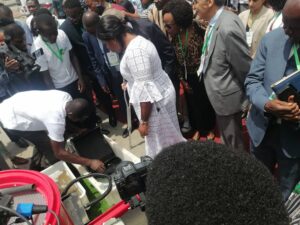
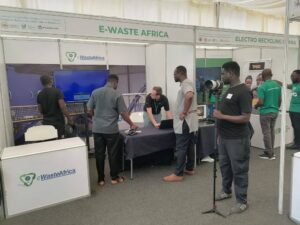
Hon. Ophelia Mensah Hayford revealed further that, the Global E-Waste Monitor has reported a record of 62 million tonnes of e-waste produced in 2022 and less than a quarter (22.3%) was collected and recycled in an environmentally sound management channel. “The rest is either stored away in people’s homes, offices, garages, or warehouses or being dumped locally or traded illegally across borders to less endowed countries like ours where unsustainable and crude methods of treatment are employed to extract useful fractions culminating in the creation of contaminated sites”.
She averred that in recent years, electronic devices have become an integral part of people’s lives, facilitating communication, enhancing productivity, and driving innovation. “As a result, the demand for mineral resources to fuel this growth has become insatiable, resulting in significant environmental consequences and impacting our global commitment towards the realization of the Sustainable Development Goals (SGDs).”
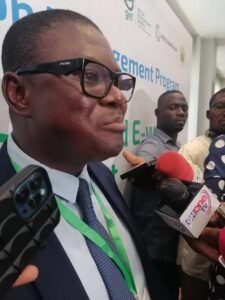
Mr. John Kingsley Krugu, Acting Executive Director of Environmental Protection Agency (EPA) on his part said, now there are available technology that can be used by the small scale miners to extract gold without using mercury.
Mercury according to the EPA Boss is a dangerous chemical and has negative impact on human health including other leaving organism.
“Even there is a gender angle to it that mercury is one of the metals that is easily absorb by fatty bodies. So, it affect women more than men because, the more fat you have, you are absorbing it”.
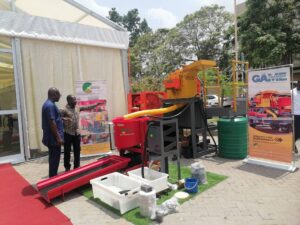
The ASGM communities he stated, are where women does most of the washing, cleaning etc hence being under risk. “That is the reason why the Africa Environmental Health and Pollution Management Programme being implemented by the EPA Ghana and other African countries, is looking closely as to how best can we support the sector”.

