As part of efforts to achieve sustainable fishing and livelihood and save the marine fisheries from total collapse, the Ministry of Fisheries and Aquaculture Development has initiated measures including; Closed season for all fleet; Ban on Saiko; Introduction of New Trawl Gear Directive; Reduction in fishing days for trawlers; Improved licensing regime for semi-industrial vessels; Piloting of Electronic Monitoring System on trawlers and; the establishment of Co-management structures such as Small Pelagic Co-management Committees.
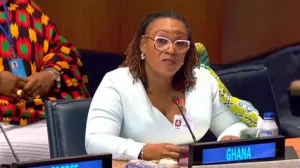
This was disclosed by the Minister for Fisheries and Aquaculture Development, Hon. Mrs. Mavis Hawa Koomson at a press conference to announce Moratorium for New Canoe Entrants to the Marine sector.
The introduction of a moratorium on new entrants for canoes the Minister indicated, is one new measure that the government is pursuing to ensure availability of fish for income and health for Stakeholders.
“it is simply a PAUSE on new entrants of canoes in the sector”.
“The Moratorium is one of the key measures to control fleet capacity and fishing efforts to sustainable levels and prevent the collapse of the fishery. The Moratorium is for a 3-year period and its implementation would be reviewed annually”. Read Also: Mahama Urges Youth To Reject Drugs And Shortcuts
She revealed that, the Ministry and the Fisheries Commission have over the past 2 years engaged extensively with stakeholders at the community, district, regional and national levels for the buy-in of the measure.
“The stakeholders along the value chain who were consulted include boat builders and carvers, traditional authorities, relevant government ministries and agencies among others”.
Among the objectives of the management measure Hon. Mavis Hawa Koomson stated comprises; aligned fishing effort with estimated annual sustainable levels end open access regime and full roll out of Canoe Identification Cards re-characterize canoes by regulating canoe size, gear & motor sizes, improve the socio-economic wellbeing of fishers along the value chain, improve efficiency in the sale and distribution of premix fuel contribute to the reduction of deforestation to mitigate impact of climate change.
Again, to mitigate the potential negative impact on the fishers and that, the Ministry in collaboration with the USAID funded Ghana Fisheries Recovery Activities (GFRA), is supporting supplementary livelihood interventions designed to attract the youth between the ages of 15-35 years.
Also, under the MoFAD Aquaculture for Food and Jobs (AFJ) project, opportunities and support would be given interested individuals as a complementary or alternative livelihood source. http://www.ghanaweb.com
The Minister therefore, implored all fishers and stakeholders to commit to intensify engagements on how best to address issues of overcapacity and degradation of the environment in the artisanal sector.
“This must be discussed dispassionately taking into consideration the fact that we must sacrifice today to feed the future. Together we must do all it takes to ensure Profitable and Sustainable Management of Ghana’s Fisheries Resources”.
The fisheries sector she mentioned, contributes significantly to nutrition and food security, as well as employment opportunities and poverty reduction and is made up of the artisan, semi-industrial and industrial fisheries.
Hon. Hawa Koomson also revealed that, the marine artisanal fisheries subsector contributes to about 70% – 80% of the total annual pelagic catch. “This subsector is sustained by small-scale fishers and fish processors. This Traditional manner of fisheries in Ghana, involves fishers, using relatively small amount of capital and energy, relatively small fishing vessels (canoes), making short fishing trips, close to shore, mainly for local consumption”.
She voiced out that, notwithstanding the subsector’s significance, the artisanal fishermen have engaged in activities which had contributed to overcapacity, overfishing, low productivity and low profitability in the marine fisheries sector.
According to her, in the midst of the fishers struggling to make their expeditions more profitable, the small pelagic stocks are on the verge of collapse.
“With the current open access regime, the canoe fleet has increased from 8,000 in 1990 to over 12,000 in 2023. However, the small pelagic fish landings, which is the backbone of the artisanal subsector, has decreased from 119,000 metric tons in 1990 to 20,000 metric tons 2022. For instance, annual landings of the Sardinella Aurita declined from 119,515 tonnes in 1992 to 11,834 tonnes in 2019 representing 9.9% of its largest recorded landings. Indeed, our scientist have informed us that a stock is considered collapsed when it reaches 10% of its highest yields and have therefore concluded that the Sardinella Aurita has collapsed. The decline in landings of the small pelagic fishes is affecting the livelihoods of over 3 million people along the value chain”.
The situation Hon. Mavis Hawa Koomson indicated, has compelled most fishers to engage in various forms of Illegal unreported and unregulated fishing activities such as, the use of undersized mesh nets leading to landing of juveniles, light fishing, the use of chemicals and explosives to make their fishing expedition profitable.
“You will agree with me that we no longer experience bumper catches like we used to in the 1970’s and 90’s when our women bring the fish to the communities shouting ‘eeigmon oo’ ‘eeigmon oo’”.