Ahmed Ibrahim Calls for Waste Management Reforms

Date:


Stakeholders in Ghana’s sanitation sector have called for an urgent shift from landfill-dependent waste disposal systems to sustainable, engineered waste treatment infrastructure, warning that persistent funding gaps could undermine efforts to maintain cleanliness and environmental safety within the Greater Accra Metropolitan Area (GAMA).

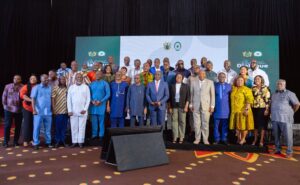
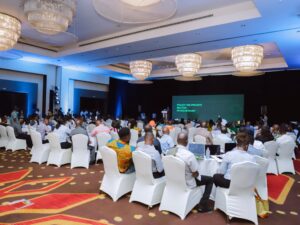
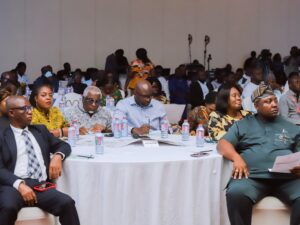
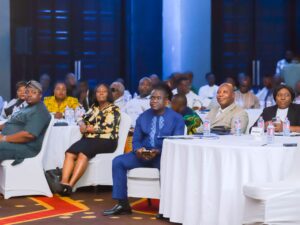
The call was made during a high-level stakeholder dialogue on landfill and waste management held at the Kempinski Hotel Gold Coast City in Accra on Monday, June 8, 2026 on the theme “Alleviating Waste Disposal crisis in Greater Accra.”

The meeting brought together government officials, Metropolitan, Municipal and District Chief Executives (MMDCEs), sanitation experts and private sector operators.

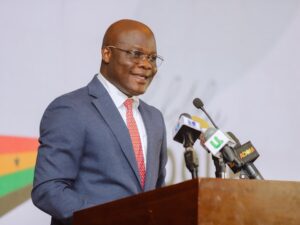
Delivering the keynote address, the Minister for Local Government, Chieftaincy and Religious Affairs Ahmed Ibrahim, noted that rapid urbanisation and population growth continue to place enormous pressure on existing waste infrastructure. He revealed that Ghana currently generates approximately 4,400 tonnes of solid waste daily, translating into about 1.6 million tonnes annually, with an average collection rate of 80 percent. Read Only: ECOWAS Youth Tackle West Africa Cyber Risks

The Minister warned that daily waste generation was projected to rise significantly over the next decade, making investment in modern treatment facilities an urgent national priority.

He emphasised that sustainable financing remained the biggest obstacle facing the sector. Hon. Ibrahim acknowledged that waste management cannot be left solely to market forces, drawing comparisons with countries such as South Korea. He disclosed that discussions are ongoing with the Ministry of Finance to secure dedicated funding to settle outstanding obligations owed to private waste management companies. http://dailydemocratnewsonline.com

The Minister also challenged MMDCEs to take greater responsibility for sanitation outcomes, stressing that even the most sophisticated facilities cannot function effectively without adequate operational funding. He warned that delayed payments could trigger serious environmental and public health consequences.

The President of the Environmental Service Providers Association (ESPA) and Executive Chairman of the Jospong Group of Companies, Dr. Joseph Siaw Agyepong, described reliance on landfills as an outdated approach that has repeatedly failed. According to him, all 17 landfills constructed across the country with support from international partners reached capacity within a decade. He stressed that modern systems should prioritize collection, transfer stations, recycling and composting, with landfills as a last resort.

The stakeholders also highlighted concerns over inadequate revenue mobilisation and tariff structures.

The President of ESPA further noted that although international benchmarks recommend household waste collection fees between $15 and $20 in lower-middle-income countries, operators in Ghana struggle with low recovery rates.

Despite challenges, participants pointed to Ghana’s growing reputation as a leader in environmental sanitation technology across Africa. The country now boasts of more than 50 waste treatment and composting facilities. Ghanaian firms are currently providing expertise in several African countries, including Kenya and Ethiopia.

Dr. Agyepong attributed this success to sustained investments in local expertise, revealing that sanitation service providers have supported the training of hundreds of highly qualified professionals.

The Vice Dean of the MMDCEs, Dr. Michael Mensah, assured stakeholders that local authorities remain committed to improving sanitation standards.

Research findings presented indicated that poor waste management costs Ghana more than GH¢6.2 billion annually through flood-related destruction, healthcare expenses and environmental degradation.

Participants concluded with a renewed commitment to strengthening collaboration between government, local authorities, and private service providers, emphasizing that policy discussions must translate into sustainable financing mechanisms capable of keeping Accra and the wider GAMA area clean.
Share post:

Subscribe

Popular

More like this
Related

Olori Atuwatse III Challenges African Leaders on Investment Reforms

  Olori Atuwatse III, wife of the Olu of Warri,...

WAPO Reports 35% Membership Growth, Eyes Stronger Pan-Africanism

  The West Africa Peoples’ Organisation (WAPO) has called for...

LCB Corporate Games: GPHA, LCB Worldwide Crowned Champions

  The Ghana Ports and Harbours Authority (GPHA) Fire and Safety Team and LCB Worldwide Ghana Football Team have emerged champions of the 2026 LCB Corporate Games in the Tema and Accra Zones respectively, following weeks of competitive football action. The grand finale of the fifth edition of the competition was held on Saturday, October 31, 2026, at Mexico Park, Community 2, Tema, bringing together participating companies from the ports and shipping industry and other sectors. In the Tema Zone final, GPHA Fire and Safety secured a narrow 1-0 victory over the Ghana National Fire Service (GNFS) Team to clinch the ultimate title. In another decisive encounter, LCB Worldwide Ghana delivered an impressive performance in the Accra Zone, thrashing the Ghana Immigration Service Team 5-0 to emerge champions. The final standings saw LCB Worldwide Ghana finish first in the Accra Zone, followed by the Ghana Immigration Service in second place, while Manna Team settled for third. In the Tema Zone, GPHA Fire and Safety claimed the top spot, with the Ghana National Fire Service finishing as runners-up and Wilmar Africa taking third place. Winners Take Home Cash Prizes  The victorious teams were rewarded with cash prizes in recognition of their performances. The champions in both zones received GH¢20,000 each, while the first runners-up took home GH¢10,000 each. The second runners-up were also rewarded with GH¢5,000 each. Individual awards were presented to outstanding performers, with the tournament's top scorer receiving GH¢2,000 and the Best Goalkeeper taking home GH¢1,000. 16 Teams Compete in Fifth Edition  A total of 16 teams, comprising eight teams from each zone, participated in this year's competition, which featured several weeks of exciting football action. The Accra Zone participants included the Ghana Union of Traders (GUTA), Ghana Institute of Freight Forwarders (GIFF), LCB Worldwide Ghana, Ghana Immigration Service, Aviance, Mariners, Manna and Conquerors. The Tema Zone was represented by Port Hub, GPHA Fire and Safety, Ghana National Fire Service, GPHA Mechanical, Ezeylinks, Wilmar Africa, Tema Metropolitan Assembly (TMA) and Ghana Dock Labour Company Limited (GDLC). LCB Eyes Expansion of Corporate Games  Speaking to the media on the sidelines of the grand finale, a representative of the Human Resource Department at LCB Worldwide, Solomon Dwamena Aboagye expressed satisfaction with the performance of the participating teams and the overall impact of the competition. He noted that the objectives behind organising the games had consistently been achieved over the years, adding that LCB Worldwide Ghana remained committed to expanding the initiative to attract more corporate organisations. “We are hoping that in the next few years, the participating companies will be more. We are hoping to bring companies from other industries. We are expecting the financial institutions, oil and gas companies and even the educational sector as well,” he said. Mr. Aboagye further disclosed that the competition was fully sponsored by LCB Worldwide Ghana, expressing optimism that the company would continue to mobilise resources to sustain and increase the prize money in subsequent editions. Promoting Corporate Unity Through Sports  The LCB Worldwide Corporate Games was initiated to foster camaraderie, strengthen professional relationships and promote bonds of friendship among companies, particularly those operating within the ports and shipping industry. Beyond sports, LCB Worldwide Ghana has also established a strong presence through its corporate social responsibility initiatives. The crisis management company has been operating in Ghana since 2017 and has been contracted by the Government of Ghana, through the Ministry of Health, to undertake fumigation and disinfection of cargo at the country's ports and designated points of entry and exit. As part of its commitment to public health and community development, the company has undertaken fumigation exercises at markets, hospitals, senior high schools and tertiary educational institutions across the country. The successful organisation of the fifth edition of the LCB Corporate Games further underscores the company's commitment to using sports as a platform to promote teamwork, corporate engagement and stronger relationships among businesses in Ghana.

Experts Urge Ghana to Strengthen National Security Strategy

  By: Martin Osei Tutu The Nyansa Institute for Strategic Dialogue...