The Ministry of Gender, Children and Social Protection (MoGCSP) has on July 30, celebrated 2024’s World Day Aganist Trafficking in Persons (Blue Day) with a call on Ghanaians to fight the canker which affect millions of people
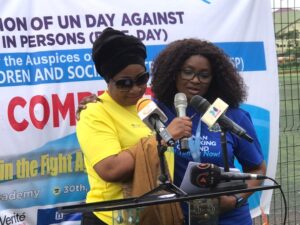
Speaking at a ceremony held at the Accra Academy Astroturf to mark the day, the Chief Director at the MoGCSP, Dr. Afisah Zakaria, described human trafficking as a modern-day slavery subjecting victims to exploitative and abusive conditions.
The event was used to raised awareness about human trafficking and empowered
children, who are the most vulnerable to this crime and also
emphasized the critical need for inclusive and focused efforts to protect children.
The World Day Against Trafficking in Persons is observed annually on July 30 to raise awareness about human trafficking and promote and protect the rights of trafficking victims.
This year’s theme; Leave no one behind focused on the connection between sports and human trafficking, highlighting how traffickers can exploit the youth’s sporting aspirations.

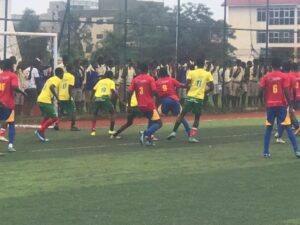
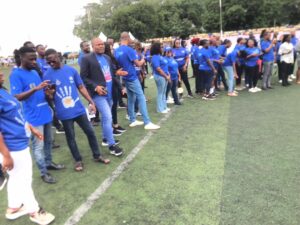
The teams which participated in the tournament included Accra Academy Senior High School, Odorgonno Senior High School, Kaneshie Senior High Technical School, and Wesley Grammar Senior High School.
Before the football competition, Dr. Afisah Zakaria called for unity to create a world where every child can grow up safe, free, and empowered to reach their full potential.
“To the children gathered here today, I want to emphasize that there is no place like home. Dear young ones, don’t be spectators in affairs that concern you. Acquire knowledge, stand out, speak out, and get counted in the fight against human trafficking,” she urged.
She also called on the media to join the campaign by hosting expert discussions and talk shows on safe migration.
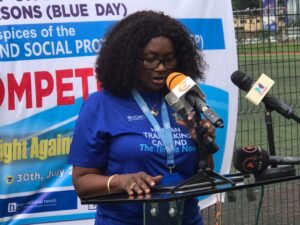
“Irregular migration, using unapproved routes, seeking help from middlemen and unregistered recruitment agents make you vulnerable to human trafficking. We must understand the root causes and factors that drive human trafficking to address these issues. Traffickers and smugglers exploit your vulnerability and poverty. Be vigilant and travel right.”
The government, he indicated, remains steadfast in its commitment to strengthening the legal framework, policies, and programs aimed at preventing trafficking, supporting survivors, and holding perpetrators accountable. “Our collaboration extends beyond national borders as we work closely with international partners, civil society organizations, and local communities to ensure that no child is left behind in this fight.”
According to the United Nations Office on Drugs and Crime’s (UNODC) Global Report on Trafficking in Persons (GLOTIP), children are twice as likely to face violence during trafficking than adults. Child trafficking violates their rights and denies them the ability to reach their full potential.
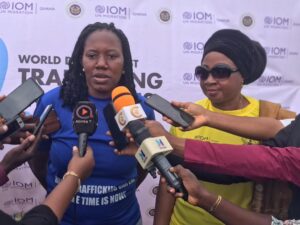
The Chief of Mission for IOM, Falou Diallo Ndiaye, stated that her organization has organized numerous community sensitization activities and social media campaigns, recognizing social media as a tool for recruiting potential victims. “In 2023, IOM Ghana assisted the humanitarian return of fifty victims of trafficking; more than half of whom were young women from the Gulf regions. These victims have been equipped to start and manage microbusiness enterprises to support themselves and their families.”
Trafficking in persons, Ndiaye asserted, is a grievous crime and a severe human rights violation that affects men, women, and children worldwide. IOM is deeply committed to countering trafficking by working closely with governments, other United Nations agencies, international and non-governmental organizations, and the private sector to achieve their shared goal of eliminating trafficking.